Minute Man Fossils
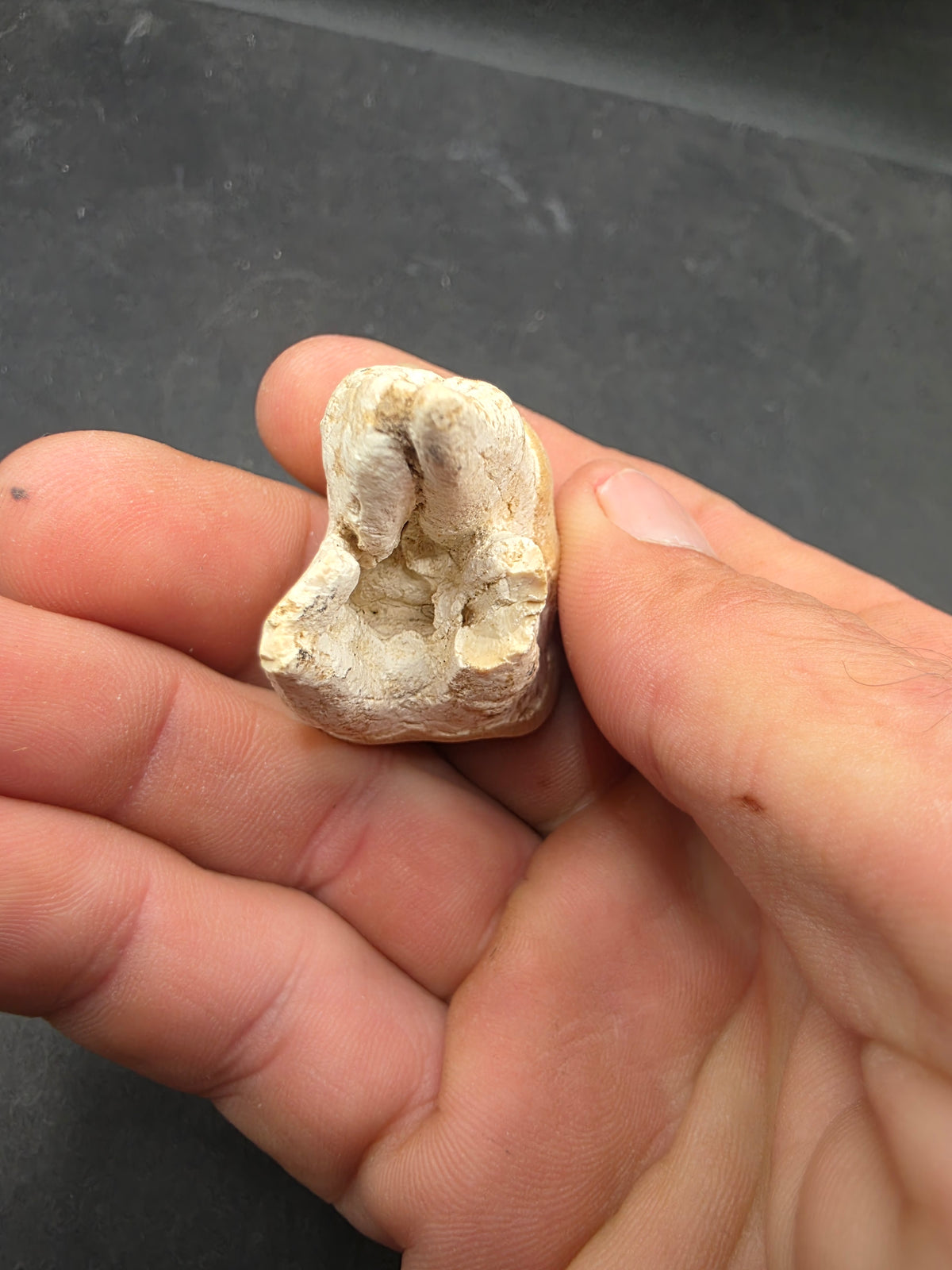
Teleoceras Tooth-Oklahoma 003
Teleoceras Tooth-Oklahoma 003
Couldn't load pickup availability
Taxa: Teleoceras sp.
Geology: Ogallala formation
Age: Pliocene
Locality: Texas County, Oklahoma
Size: 1.5"x1.2"x1" or 4x3.3x2.6 cm
No repairs or restorations
Teleoceras
Teleoceras is an extinct genus of large, heavy-bodied rhinoceros that inhabited North America during the Miocene and early Pliocene epochs, thriving from about 17 to 4 million years ago. Unlike modern rhinos, Teleoceras had a barrel-shaped body, remarkably short and stubby legs, and a single small nasal horn, giving it an anatomical build that strongly resembled a modern hippopotamus. This physical adaptation suggests it was semi-aquatic, spending much of its time wallowing in rivers, lakes, and slow-moving streams while feeding on abundant aquatic and riparian vegetation across the ancient American landscape.
Ogallala Formation
The Ogallala Formation is a vast, continental geologic deposit stretching across the central High Plains of the United States, from South Dakota down to Texas. Laid down primarily during the Miocene and early Pliocene epochs, it consists of gravel, sand, silt, and clay eroded from the rising Rocky Mountains and spread eastward by a network of braided streams and rivers. Interbedded with occasional volcanic ash falls and hardened caliche layers, this thick blanket of sediment forms the primary geological host for the Ogallala Aquifer, one of the world's largest underground freshwater reservoirs that sustains the vital agricultural economy of the American Great Plains.