Minute Man Fossils
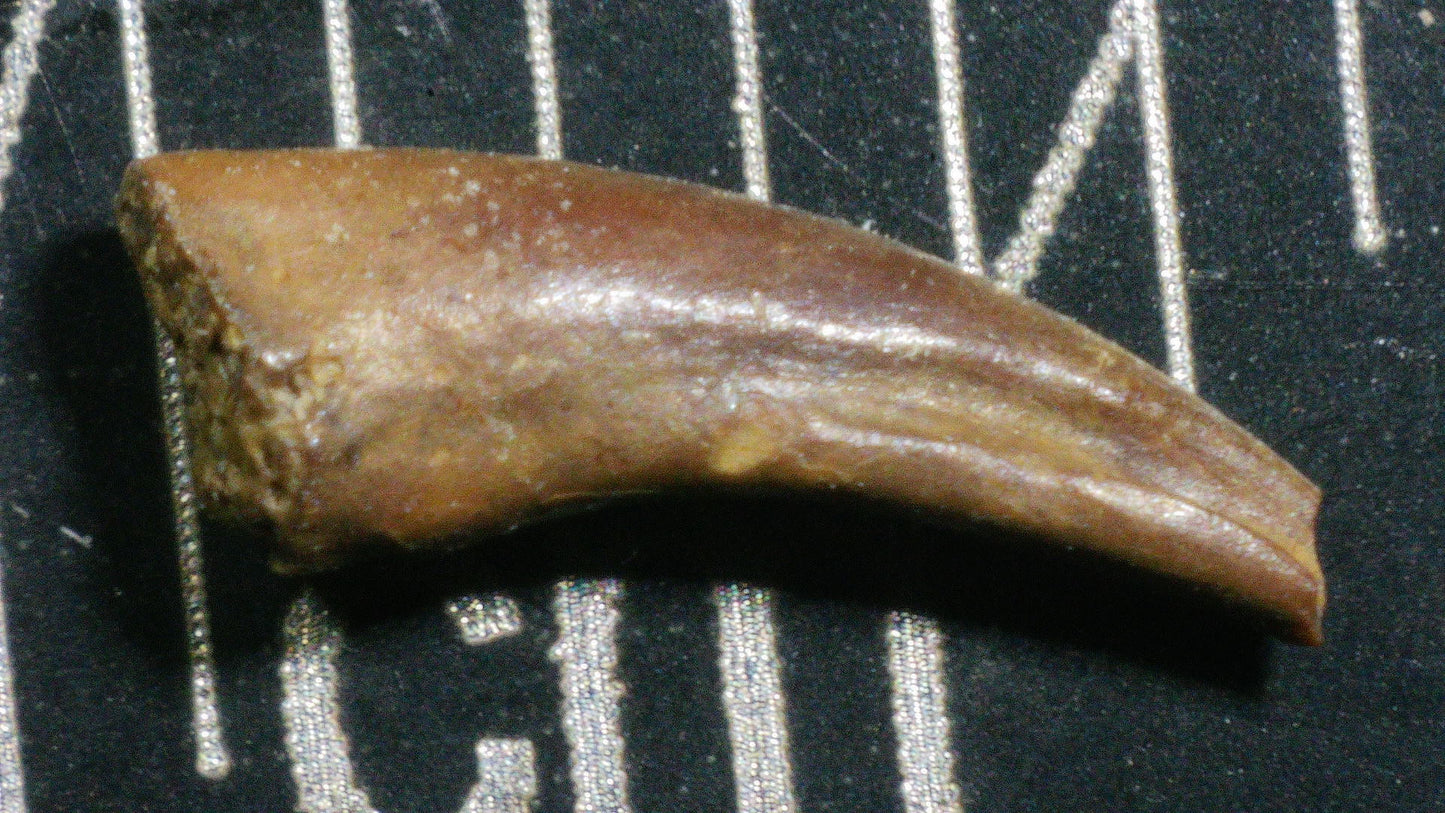
Indeterminate Theropod Foot Claw-Texas
Indeterminate Theropod Foot Claw-Texas
Couldn't load pickup availability
Taxa: Indeterminate Theropod Ungual (Claw)
Geology: Aguja formation
Age: Cretaceous-Campanian
Locality: Brewster County, Texas
No repairs or restorations.
Aguja Theropods
Small theropods from the Aguja Formation were rare, mostly known from isolated teeth and fragmentary bones, but they show that the ecosystem supported a small-predator guild alongside larger dinosaurs. The best-documented material suggests compact, agile meat-eaters comparable to troodontids or dromaeosaurids, and one of the more complete specimens from the uppermost Aguja is consistent with either of those groups. These animals likely hunted small vertebrates and may have shared ecological roles with varanoid lizards, with many of the known fossils coming from tiny individuals that could represent juveniles as well as small-bodied species.
Aguja formation
The Aguja Formation is a Late Cretaceous rock unit exposed in West Texas and parts of northern Mexico, best known for preserving coastal-plain and shallow-marine sediments deposited along the western margin of the Western Interior Seaway. It consists mainly of sandstone, shale, mudstone, and lignite, recording shifting environments such as deltas, shorefaces, marshes, swamps, and floodplains, and it has yielded a diverse fossil fauna including dinosaurs, crocodylians, turtles, plants, and fossil wood. In simple terms, it represents a dynamic ancient coastal ecosystem from the Campanian that preserves one of the southernmost dinosaur assemblages known in North America.