Minute Man Fossils
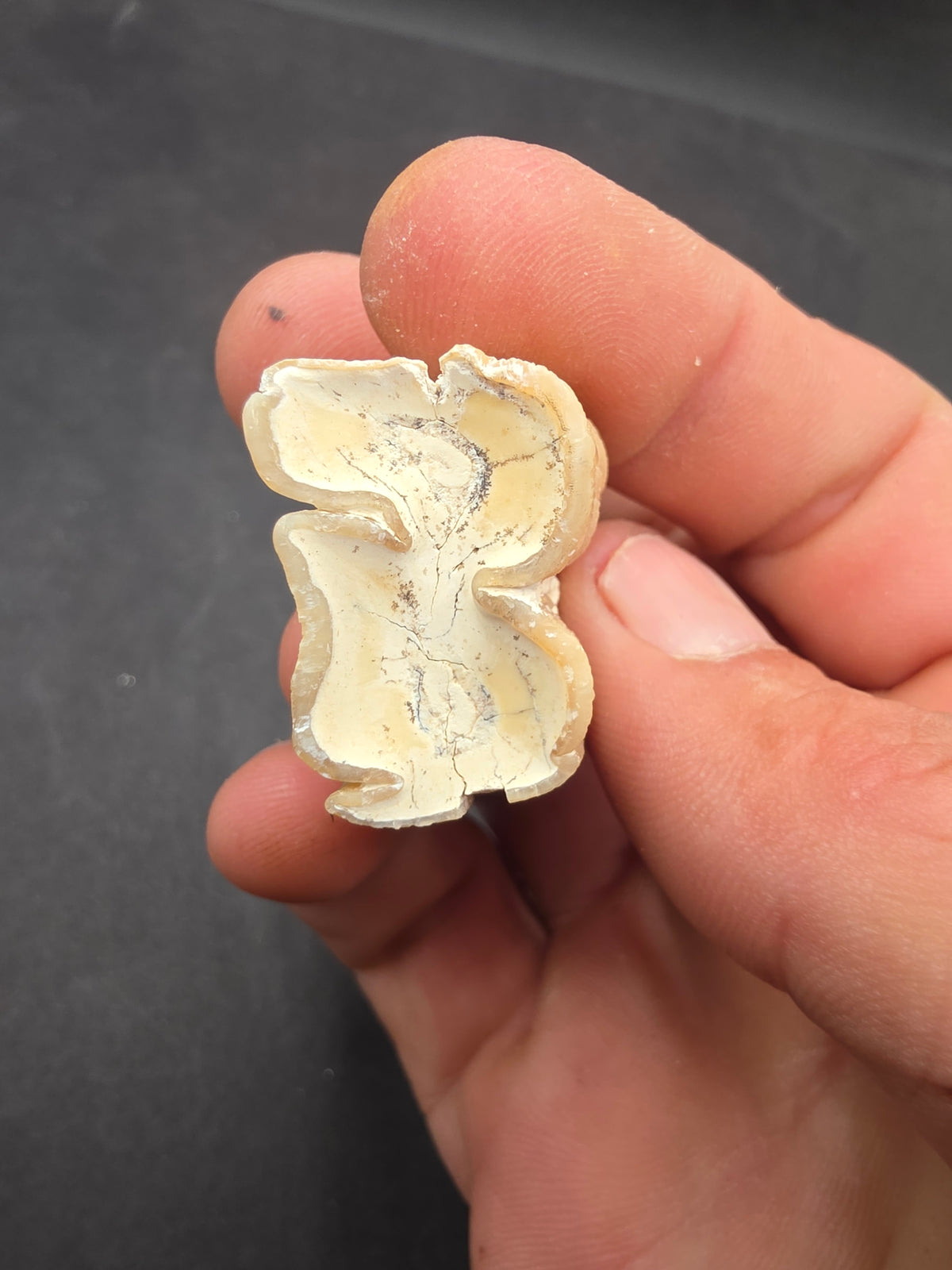
Dinohippus Tooth-Nebraska 001
Dinohippus Tooth-Nebraska 001
Couldn't load pickup availability
Taxa: Dinohippus sp.
Geology: Ogallala formation
Age: Pliocene
Locality: Texas County, Oklahoma
Size: 1.3"x1"x0.6" or 3.4x2.6x1.6 cm
No repairs or restorations
Dinohippus
Dinohippus is an extinct genus of large, single-toed equid that flourished throughout North America from the late Miocene through the Pliocene epochs, spanning roughly 12 to 2 million years ago. Meaning "terrible horse," it was a heavily built grazer that stood as one of the most widespread and successful horses of its time. Paleontologists consider Dinohippus to be the closest evolutionary precursor and direct ancestor to the modern genus Equus (which includes modern horses, zebras, and donkeys), notably exhibiting the earliest known development of the "stay apparatus"—a specialized tendon and ligament system that allows modern horses to stand effortlessly for long periods without muscle fatigue.
Ogallala Formation
The Ogallala Formation is a vast, continental geologic deposit stretching across the central High Plains of the United States, from South Dakota down to Texas. Laid down primarily during the Miocene and early Pliocene epochs, it consists of gravel, sand, silt, and clay eroded from the rising Rocky Mountains and spread eastward by a network of braided streams and rivers. Interbedded with occasional volcanic ash falls and hardened caliche layers, this thick blanket of sediment forms the primary geological host for the Ogallala Aquifer, one of the world's largest underground freshwater reservoirs that sustains the vital agricultural economy of the American Great Plains.