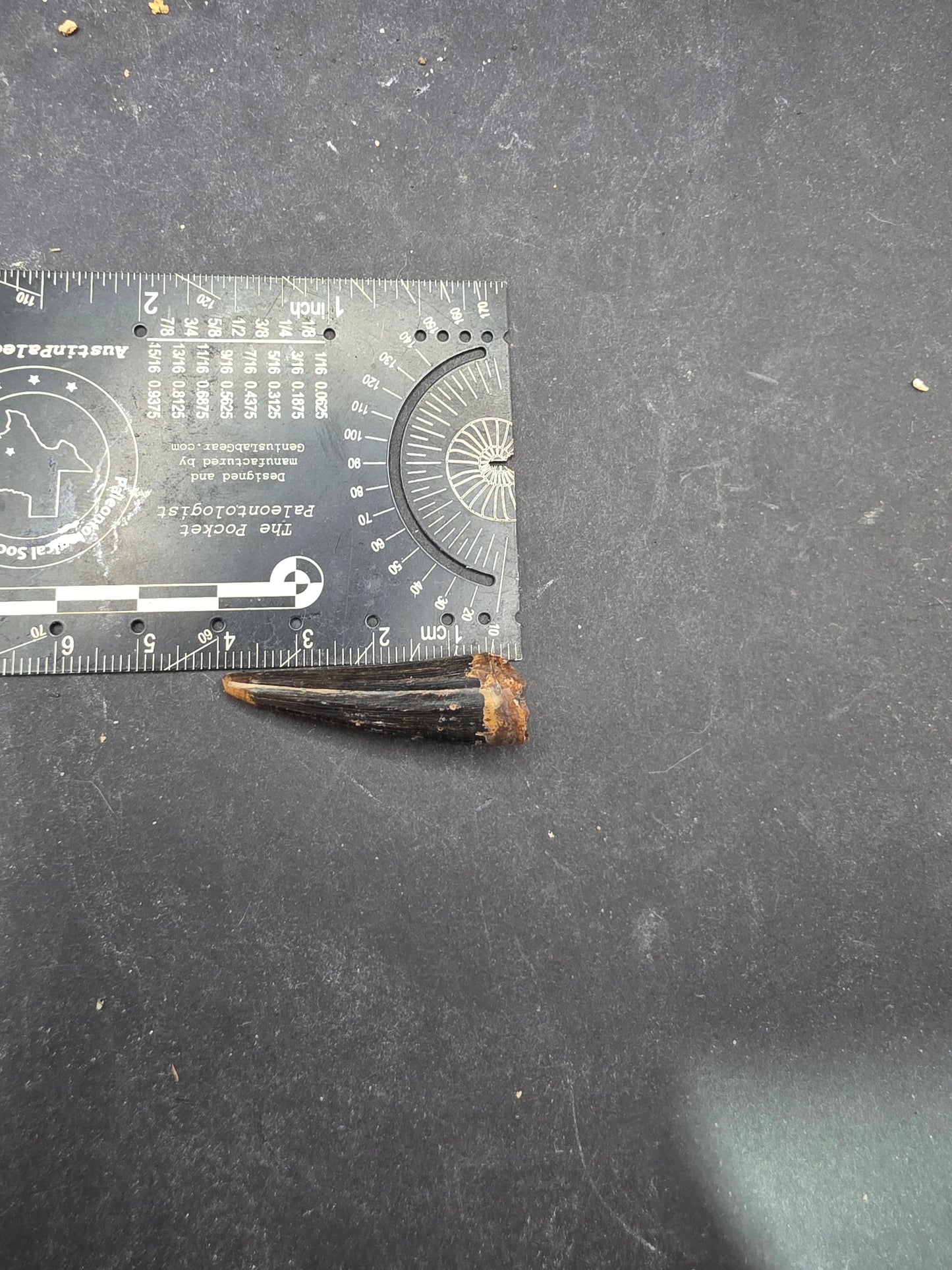
Minute Man Fossils
Crocodylomorph Tooth-Texas 02
Crocodylomorph Tooth-Texas 02
Couldn't load pickup availability
Taxa: Indeterminate Crocodylomorph Tooth
Geology: Aguja formation
Age: Cretaceous-Campanian
Locality: Brewster County, Texas
No repairs or restorations.
Aguja Crocodylomorphs
Crocodylomorphs from the Aguja Formation were crocodile-line reptiles living in Late Cretaceous coastal-plain and river environments of West Texas, where they occupied a range of semi-aquatic predator roles. The best-known form is the giant alligatoroid Deinosuchus riograndensis, known from partial skulls and other skeletal material and famous for its immense size and predatory power, while other Aguja crocodylomorph remains are often fragmentary teeth and isolated bones that are harder to identify more precisely. In general, they were robust ambush predators adapted to freshwater habitats, feeding on fish and other vertebrates, and they were an important part of the Aguja ecosystem.
Aguja formation
The Aguja Formation is a Late Cretaceous rock unit exposed in West Texas and parts of northern Mexico, best known for preserving coastal-plain and shallow-marine sediments deposited along the western margin of the Western Interior Seaway. It consists mainly of sandstone, shale, mudstone, and lignite, recording shifting environments such as deltas, shorefaces, marshes, swamps, and floodplains, and it has yielded a diverse fossil fauna including dinosaurs, crocodylians, turtles, plants, and fossil wood. In simple terms, it represents a dynamic ancient coastal ecosystem from the Campanian that preserves one of the southernmost dinosaur assemblages known in North America.